A pool on its own is just a hole in the ground filled with water. What makes it a genuinely usable, good-looking outdoor space is everything built around it. Most homeowners focus heavily on the pool itself during the planning stage, then realise too late that the landscaping surrounding it is just as involved, and just as important to get right.
A complete poolside design covers coping, paving, drainage, planting, fencing, lighting, and how all of those elements connect to the rest of your outdoor space. Each one affects the others. Getting one wrong can create problems that are expensive to fix after the fact.
Pool Coping: The Edge That Sets the Tone
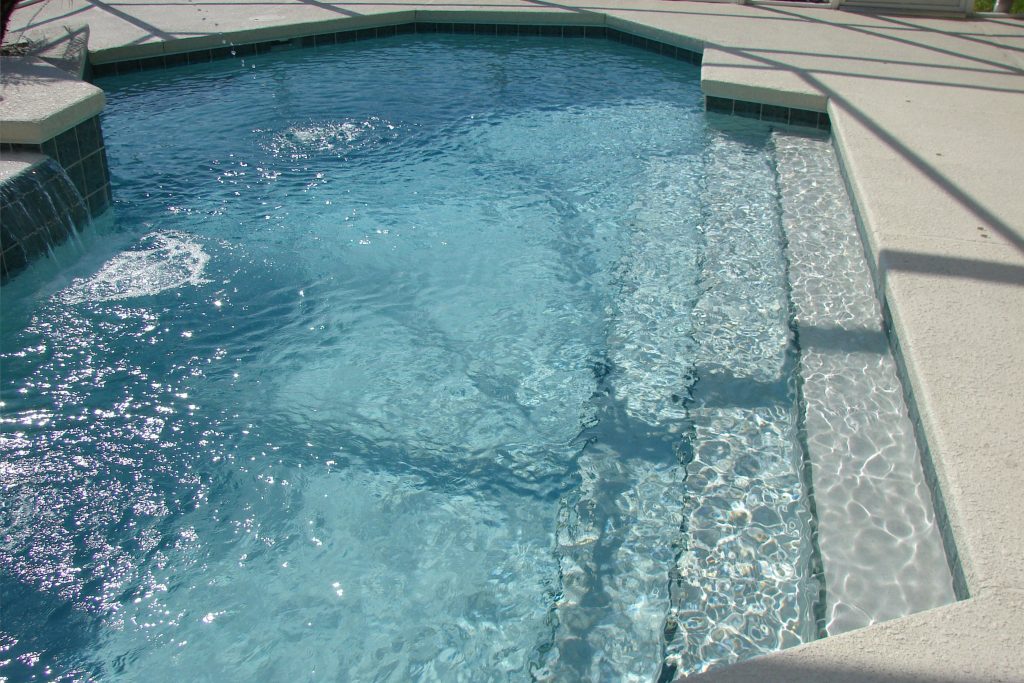
Pool coping is the material that caps the edge of the pool shell. It sits at the junction between the pool structure and the surrounding paving, and it does more than look good. It protects the pool shell from water ingress, gives swimmers a safe edge to grip, and creates a visual boundary between the water and the hardscape.
Material choice matters here. Travertine, bluestone, sandstone, and porcelain are all common options in Brisbane, and each behaves differently in terms of heat retention, slip resistance, and maintenance. Light-coloured natural stone stays cooler underfoot in summer, which is a real consideration in south-east Queensland. The coping profile and overhang also affect how water drains off the edge and how the finished pool looks from a distance.
Coping needs to be installed correctly to avoid movement over time. If it lifts or shifts, water can get behind the pool shell and cause structural damage that goes unnoticed until it becomes a significant repair.
Pool Paving in Brisbane: More Than Just a Surface
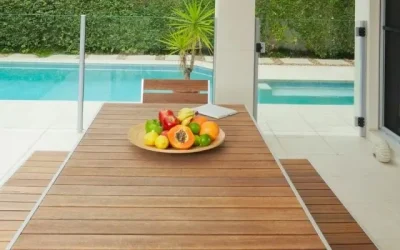
The paved area around a pool takes more punishment than almost any other surface in a residential landscape. It gets wet constantly, baked by the sun, and walked on with bare feet. Choosing the wrong material, or having it laid without proper drainage planning, leads to slipping hazards, pooling water, and surfaces that deteriorate quickly.
Slip resistance is a non-negotiable consideration. In Queensland, pool surrounds need to meet specific slip rating requirements, and not all materials that look suitable actually comply. Pool paving materials need to be assessed for their wet slip rating, not just their dry appearance, before any decisions are made.
Drainage is equally important. The paving needs to fall away from the pool at the right gradient so water drains efficiently without creating runoff problems elsewhere in the yard. This requires careful planning before a single paver is laid, not an afterthought once the surface is down.
How the Paving Connects to the Broader Landscape
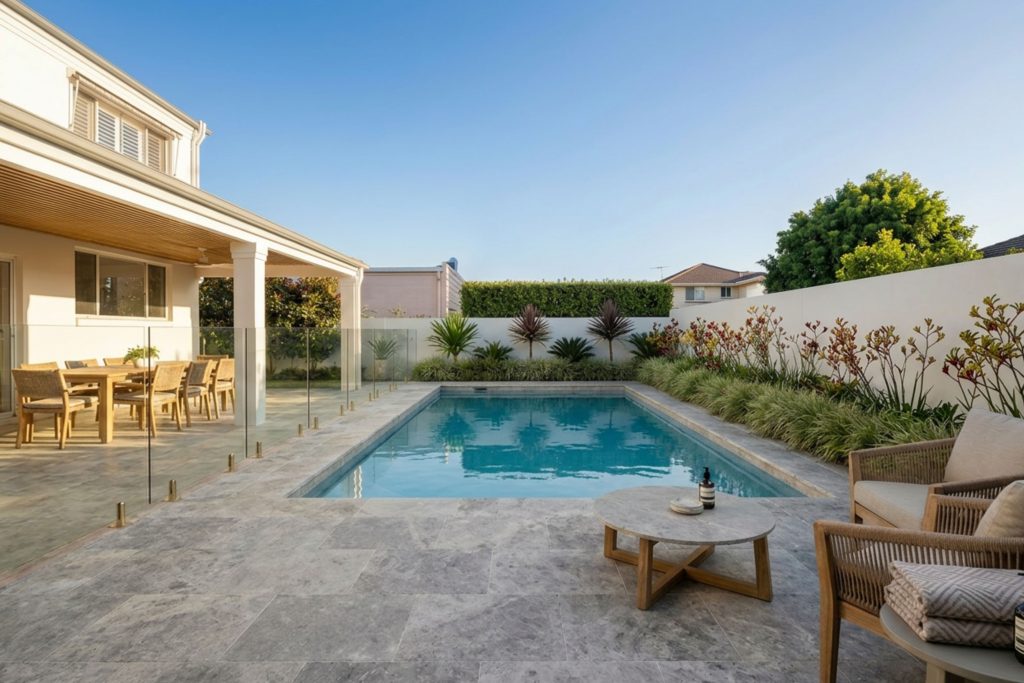
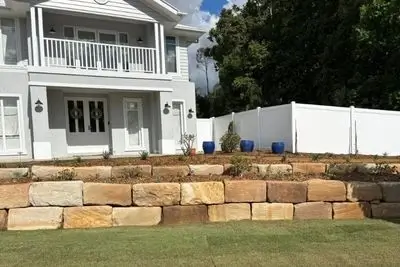
One of the most common design mistakes is treating the pool paving as a separate zone rather than part of a connected outdoor space. The material, colour, and format of the pool surround should relate to the paving used in other areas, whether that is a covered entertaining area, a pathway, or a transition to lawn.
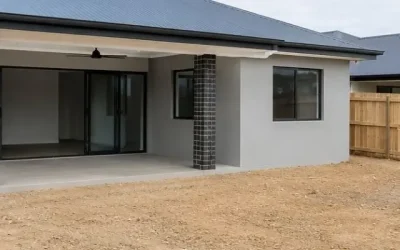
A well-designed outdoor entertaining area flows naturally from the pool surround rather than feeling like two separate projects bolted together. This continuity is what separates a considered design from a collection of individual elements.
Choosing complementary materials across zones does not mean everything has to match exactly. Contrast can work well, but it needs to be intentional. Mismatched materials that were chosen independently at different stages of a project rarely look cohesive.
Planting Around a Pool: Practical Choices Over Aesthetics Alone
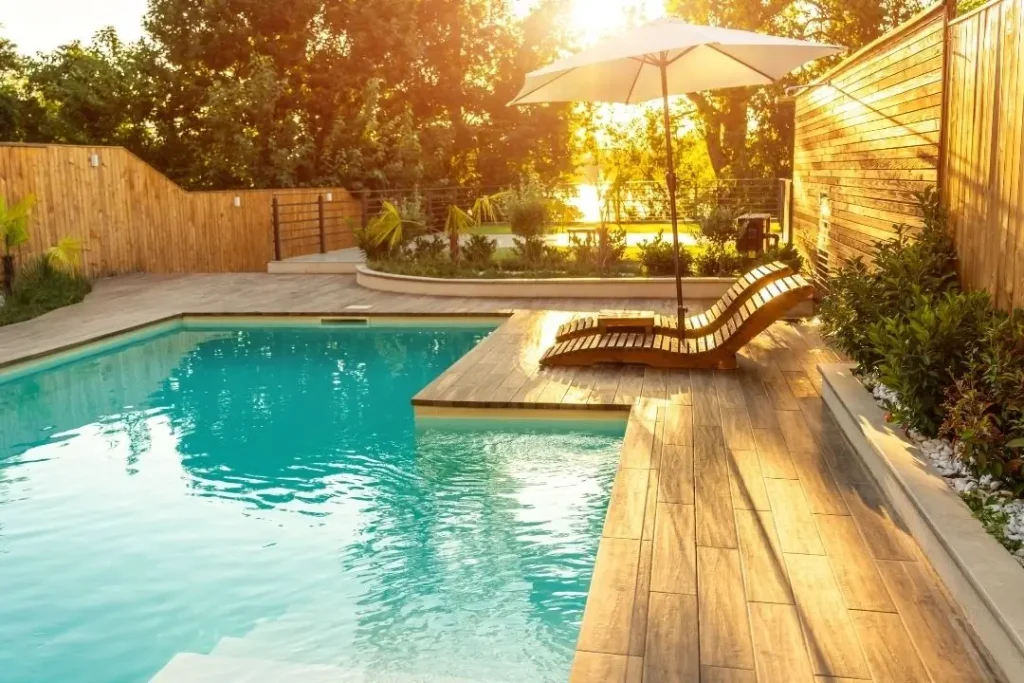
Planting is where poolside landscaping can go wrong quickly if the selection is driven purely by appearance. Certain plants drop leaves, flowers, or seed pods constantly, which means ongoing maintenance and blocked filters. Others have aggressive root systems that can damage pool infrastructure over time.
The right poolside planting uses species that are low-litter, non-invasive, and suited to the reflected heat and occasional splashing that comes with a pool environment. Ornamental grasses, strappy-leafed plants, and compact shrubs tend to perform well in Brisbane’s climate without creating maintenance headaches.
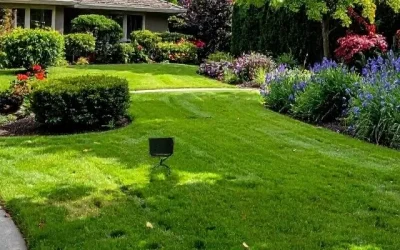
Planting also serves a functional purpose beyond aesthetics. Strategic placement can provide privacy screening, reduce wind across the water, and soften the hard edges of paving and fencing without overwhelming the space.
Fencing, Lighting, and the Details That Complete the Design
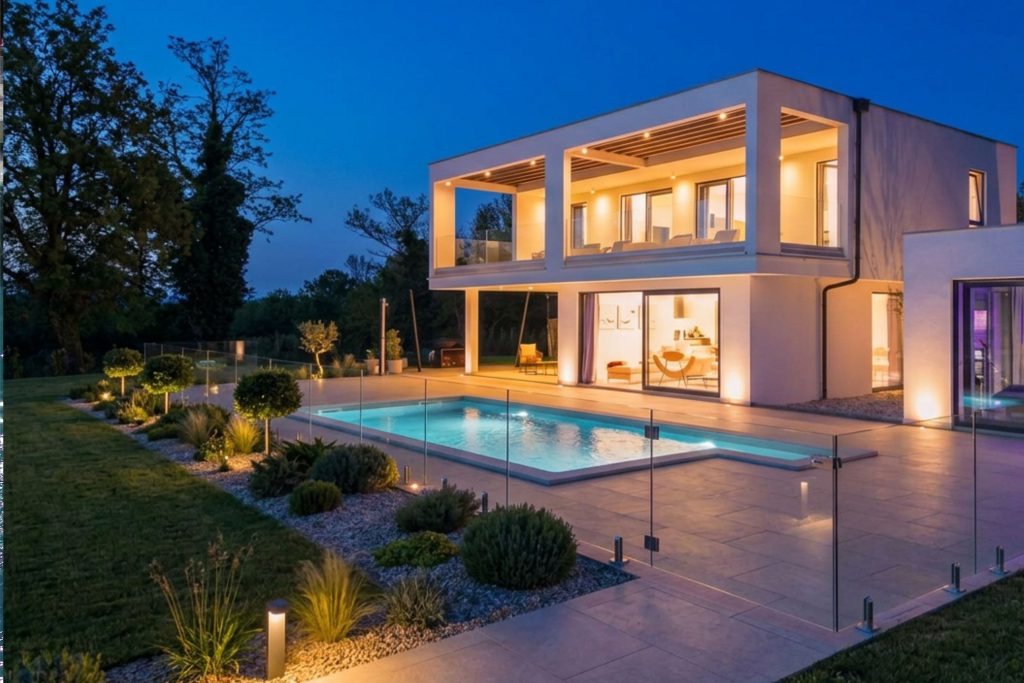
Pool fencing in Queensland is a legal requirement, and the compliance rules are specific. The fence must meet the relevant Australian Standard, and the gate must be self-closing and self-latching. These are not design choices; they are fixed requirements that the design has to work around.
That said, fencing does not have to be an eyesore. Glass pool fencing integrates cleanly into a modern landscape and maintains sightlines across the yard. Frameless or semi-frameless options suit most contemporary Brisbane homes without dominating the visual space.
Lighting is often underestimated at the planning stage. Underwater pool lights create atmosphere, but the lighting around the pool surround, in garden beds, and along pathways is what makes the space genuinely usable after dark. A pool area that is well-lit outside the water feels safer and more inviting than one where the only light comes from below the surface.
Why Sequencing the Work Correctly Matters
A poolside landscaping project involves multiple trades working in a specific order. The pool shell goes in first, then coping and paving, then drainage connections, then planting and lighting. If any of these stages are done out of sequence, earlier work often has to be undone to accommodate what comes next.
This is why pool landscaping works best when it is designed and managed as a single coordinated project rather than a series of separate decisions made as the build progresses. Changes mid-project are expensive. A clear design brief at the start prevents most of them.
It also means the landscaping design should be finalised before the pool construction begins, not after. The position of the pool, the level it sits at relative to the yard, and the location of equipment like pumps and filters all affect what is possible with the surrounding landscape.
What a Complete Poolside Design Actually Delivers
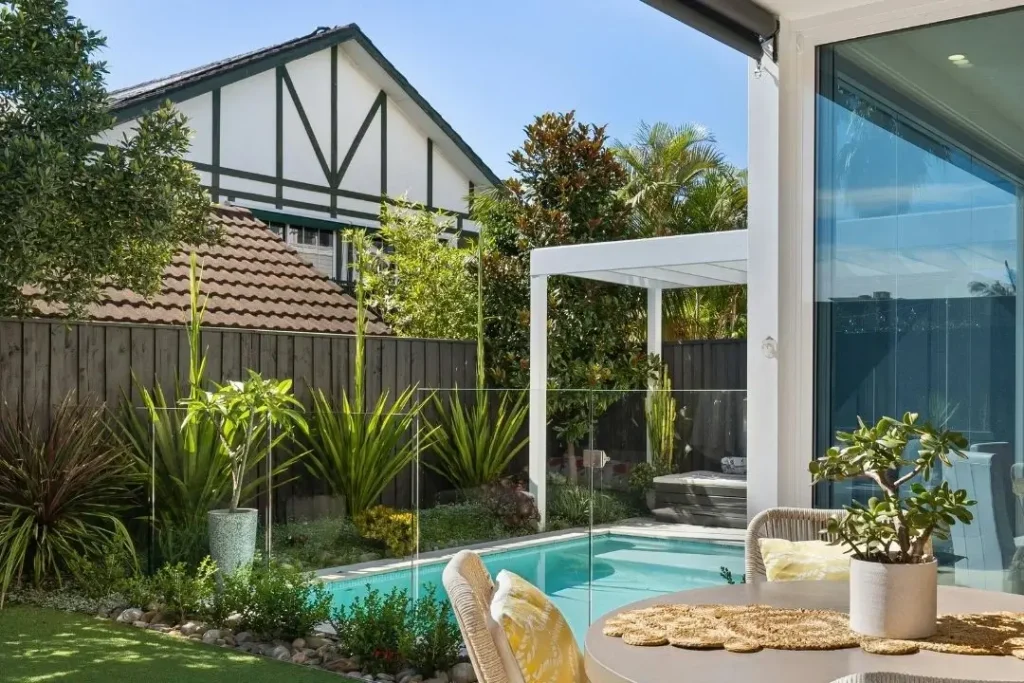
When all of these elements are designed together, the result is a space that functions well, looks considered, and holds up over time. The pool becomes part of the yard rather than a feature sitting awkwardly in the middle of it.
Homeowners who approach the pool and the surrounding landscape as one project consistently end up with better outcomes than those who treat them separately. The investment in getting the design right at the start pays off in reduced maintenance, fewer repairs, and a space that genuinely gets used.
Ready to Plan Your Poolside Landscape?
If you are planning a pool build or looking to redesign the space around an existing pool, the landscaping decisions deserve as much attention as the pool itself. For swimming pool landscaping on Brisbane’s northside, our team works through the full design from coping and paving to planting and lighting as a single coordinated project.
To talk through your project, send us a message through our landscape design enquiry page or call us directly on (07) 3608 1311.